Connecticut Dog Daycare and Pet Boarding Insurance

See How We're Different
or call us: (203) 269-9565
Running a dog daycare or pet boarding facility in Connecticut means accepting responsibility for animals that owners treat like family members. A single incident, whether it's a dog bite during group play, a kennel fire, or an employee injury, can threaten your entire operation if you don't carry the right insurance. Connecticut imposes specific licensing and regulatory requirements on
pet care businesses, and your insurance portfolio needs to reflect those obligations. Any facility in the state that boards more than three dogs or cats must
obtain a Commercial Kennel License costing $400 with biennial renewal, so compliance starts early and carries ongoing costs. Understanding the insurance side of this equation is just as critical as meeting those licensing thresholds. This guide breaks down the specific coverages, state mandates, and risk factors that Connecticut pet boarding and daycare operators need to know, so you can protect your business, your staff, and every animal in your care.
Essential Insurance Coverages for Connecticut Pet Businesses
Your insurance program should be built in layers, starting with the foundational policies that every pet care business needs and expanding into specialized coverages based on your services. Connecticut's mix of urban and suburban pet markets means facilities range from small home-based operations to large commercial kennels with dozens of runs. Regardless of size, the core coverages remain consistent.
General Liability and Professional Liability
General liability insurance is the backbone of any commercial policy. It covers third-party bodily injury and property damage claims, such as a client slipping on a wet floor in your lobby or a dog escaping and damaging a neighbor's property. Most insurers write general liability policies for pet care businesses with limits starting at $1 million per occurrence and $2 million aggregate.
Professional liability, sometimes called errors and omissions coverage, protects you against claims of negligence in the services you provide. If an owner alleges you failed to administer medication properly or didn't follow specific care instructions, this coverage responds. Many
pet business owners assume general liability handles everything, but that's a common and costly mistake. Professional liability fills the gap between physical injury claims and service-related negligence claims.
| Coverage Type | What It Covers | Typical Limits | Common Claims |
|---|---|---|---|
| General Liability | Third-party injury, property damage | $1M/$2M | Slip-and-fall, dog escapes |
| Professional Liability | Negligence in services rendered | $1M/$2M | Medication errors, care disputes |
| Animal Bailee | Animals in your custody | Varies by policy | Injury, illness, death of boarded pet |
Animal Bailee Coverage for Pets in Your Care
Standard general liability policies typically exclude damage to property in your care, custody, or control. Since the animals you board are legally considered property, this exclusion creates a serious gap. Animal bailee coverage fills it by protecting you if a pet is injured, becomes ill, or dies while under your supervision.
This coverage is non-negotiable for boarding facilities. Claims can range from a dog breaking a leg in a play yard to a pet developing kennel cough that requires veterinary treatment. Policies usually cap reimbursement per animal, often between $2,500 and $15,000, so you'll want to match your limits to the value of animals you typically board. High-end facilities caring for expensive breeds may need higher per-animal limits.
Connecticut State Requirements and Workers' Compensation
Connecticut holds employers to strict standards regarding workers' compensation and commercial vehicle use. Failing to carry mandated coverages exposes you to fines, license revocation, and personal liability.
Mandatory Coverage for Employees and Staff
Connecticut law requires workers' compensation insurance for virtually all employers, with very limited exceptions. If you have even one employee, whether full-time, part-time, or seasonal, you need this coverage. Pet care work carries real physical risks: dog bites, back injuries from lifting large animals, and slips in wet kennel areas are among the most frequent claims.
Workers' comp covers medical expenses, lost wages, and rehabilitation costs for injured employees. It also protects you from lawsuits by injured workers. Connecticut's Workers' Compensation Commission actively enforces compliance, and penalties for operating without coverage include fines up to $50,000 and potential criminal charges. Don't assume independent contractor classifications will shield you either; Connecticut applies strict tests to determine worker status, and misclassification can result in back premiums and penalties.
Commercial Auto Insurance for Pet Transport
If your business offers pickup and delivery services for pets, or if employees drive company vehicles for any business purpose, you need commercial auto insurance. Personal auto policies exclude business use, so an accident during a pet transport run would leave you uninsured.
Commercial auto coverage should include liability, collision, and comprehensive components. You'll also want to confirm that animals being transported are covered under your animal bailee policy while in the vehicle. Some policies have exclusions for
animals in transit, which creates a dangerous coverage gap. Connecticut's
minimum auto liability requirements are $25,000/$50,000 for bodily injury and $25,000 for property damage, but most commercial operations should carry significantly higher limits.
Protecting Your Physical Facility and Equipment
Your building, equipment, and the income they generate all need protection. A fire, storm, or major equipment failure can shut down operations for weeks or months.
Commercial Property Insurance for Kennels and Daycares
Commercial property insurance covers your building (if you own it), interior improvements, equipment, furniture, and supplies against covered perils like fire, theft, vandalism, and certain weather events. For kennel operations, this includes HVAC systems critical to animal welfare, fencing, grooming equipment, and security cameras.
Pay close attention to your policy's valuation method. Replacement cost coverage pays to replace damaged property at current prices, while actual cash value deducts depreciation. The difference can be tens of thousands of dollars on a major claim. If you lease your space, your landlord's policy covers the building structure, but you still need coverage for your business personal property and any tenant improvements you've made.
Business Interruption and Loss of Income
If a covered event forces you to close temporarily, business interruption insurance replaces lost income and covers ongoing expenses like loan payments, payroll, and utilities. This coverage is often added as an endorsement to your commercial property policy.
For pet boarding facilities, closures are particularly damaging because clients will find alternative care providers and may not return. Business interruption coverage typically has a waiting period of 48 to 72 hours before benefits begin, and it pays for a defined restoration period. Make sure your policy's coverage period is long enough to account for realistic rebuild timelines. A kennel destroyed by fire could take six months or more to reconstruct and reopen.
Specialized Endorsements for Dog Daycares
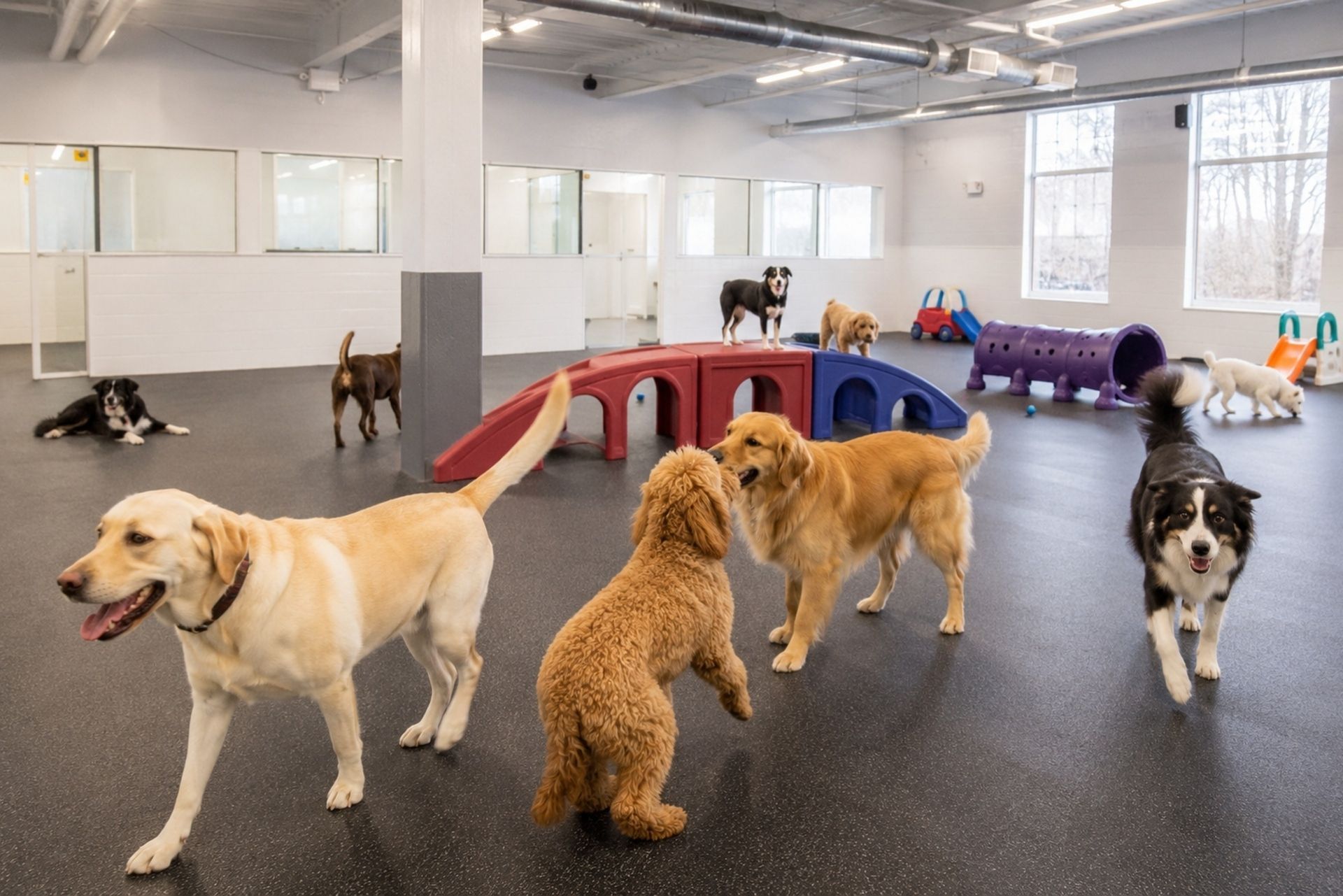
Dog daycare operations face risks that traditional boarding facilities don't, primarily because of supervised and unsupervised group interactions among animals with varying temperaments.
Group Play and Aggression Liability
Group play is the core service of most dog daycares, and it's also the primary source of claims. Dog-on-dog aggression, even among previously friendly animals, can result in serious injuries and expensive veterinary bills. Owners may hold your facility responsible regardless of whether their dog was the aggressor.
Aggression liability endorsements or standalone policies cover veterinary costs for injured animals during group play sessions. Some insurers require you to maintain specific protocols, such as temperament testing, staff-to-dog ratios, and incident documentation, as conditions of coverage. These requirements actually benefit your business by reducing claim frequency. Facilities that skip temperament evaluations or overcrowd play groups see significantly higher claim rates and premium increases at renewal.
Communicable Disease and Veterinary Expense Coverage
Kennel cough, canine influenza, and parvovirus can spread rapidly in group settings. A disease outbreak can generate dozens of claims simultaneously and force temporary closure. Communicable disease coverage helps pay for veterinary treatment of affected animals and may cover your costs to sanitize the facility.
Veterinary expense coverage, sometimes bundled with animal bailee policies, provides a set amount per incident for emergency vet care. This coverage is valuable because it allows you to act quickly when an animal is injured or falls ill, getting treatment started without waiting for a claim determination. Some policies offer first-dollar coverage with no deductible for veterinary emergencies, which can be a strong selling point when marketing your facility to pet owners.
Several variables determine what you'll pay for pet boarding and daycare insurance in Connecticut. Your facility's claims history is the single biggest factor; even one or two significant claims can increase premiums by 20% to 40% at renewal. Location matters too, as facilities in densely populated areas like Hartford, New Haven, or Stamford typically face higher premiums due to increased foot traffic and property values.
The number of animals you board simultaneously, whether you offer group play, your staff-to-animal ratios, and the physical condition of your facility all influence pricing. Insurers also evaluate your safety protocols, training programs, and whether you require vaccination records from all boarded animals. Facilities with documented safety procedures and staff training certifications often qualify for discounts. Your choice of deductible affects premiums as well: higher deductibles lower your premium but increase your out-of-pocket costs on claims.
Connecticut's insurance market for pet care businesses is moderately competitive, with several regional and national carriers writing policies. Getting quotes from at least three insurers, ideally through a broker familiar with animal care businesses, gives you the best chance of finding appropriate coverage at a fair price.
Risk Management Strategies for Pet Boarding Owners
Smart risk management does more than prevent incidents. It directly reduces your insurance costs over time. Start with thorough intake procedures: require proof of vaccinations, conduct temperament assessments for daycare dogs, and collect detailed emergency contact and veterinary information for every animal.
- Maintain written protocols for feeding, medication administration, emergency response, and severe weather
- Install security cameras in all play areas, kennels, and common spaces, and retain footage for at least 30 days
- Train every staff member in animal first aid, bite prevention, and safe handling techniques
- Document all incidents, no matter how minor, with photos, timestamps, and witness statements
- Require signed service agreements that clearly outline your liability, cancellation policies, and care standards
Staff training deserves special emphasis. The majority of preventable claims stem from handler errors: misreading body language, introducing incompatible dogs, or failing to separate animals at the first sign of tension. Investing in ongoing education for your team pays for itself through fewer claims and lower premiums.
Regular facility maintenance is equally important. Broken fencing, malfunctioning HVAC systems, and deteriorating flooring create hazards for both animals and staff. Schedule quarterly inspections and address issues immediately. Insurers may conduct their own inspections, and documented maintenance records demonstrate the kind of operational discipline that keeps your premiums competitive.
Frequently Asked Questions
Do I need insurance if I only board a few dogs from my home? Yes. Even small operations face liability exposure. If you board more than three animals, Connecticut requires a Commercial Kennel License, and most licensing authorities expect you to carry insurance.
How much does pet boarding insurance cost in Connecticut? Annual premiums for a small to mid-sized facility typically range from $1,500 to $5,000 for a basic package. Costs increase with revenue, number of animals, and added coverages like group play liability.
Does my homeowner's policy cover a home-based boarding business? Almost certainly not. Homeowner's policies exclude business activities, and claims arising from your boarding operation would likely be denied. You need a separate commercial policy.
Can I bundle all my coverages into one policy? Many insurers offer Business Owner's Policies that combine general liability, property, and business interruption coverage. Specialized coverages like animal bailee and workers' comp are typically written separately.
What happens if a dog in my care bites another dog or a person? General liability covers bites to people, while animal bailee or aggression liability covers dog-on-dog injuries. Without both, you could face significant out-of-pocket costs.
Making the Right Choice for Your Facility
Connecticut dog daycare and pet boarding insurance isn't a single policy but a carefully assembled set of coverages tailored to your specific operation. The right combination protects your business from the financial consequences of animal injuries, employee accidents, property damage, and service-related claims. Start by identifying your mandatory coverages, including workers' comp and adequate general liability, then build outward with animal bailee, professional liability, and specialized endorsements based on your services.
Work with an insurance broker who understands the pet care industry and Connecticut's regulatory requirements. Review your policies annually, update coverage limits as your business grows, and maintain the risk management practices that keep claims low. Your insurance program should evolve alongside your facility, ensuring you're never caught with a gap that could put everything you've built at risk.
About The Author:
John F. McGuire
As President of Ferguson & McGuire, I’m committed to helping families and businesses throughout Connecticut find insurance solutions they can trust. With decades of experience in the industry, my focus is on providing personal service, reliable protection, and long-term peace of mind for every client we serve.
GET A QUOTE POPUP
TESTIMONIALS
Business Insurance Client Stories

Business Insurance Solutions in Connecticut
Tailored Assessments for Businesses
We delve into the intricacies of your business operations and insurance requirements, focusing on the specific challenges and opportunities presented by the Connecticut business landscape. Our aim is to identify comprehensive coverage strategies that fully protect your business interests.
Customized Commercial Insurance Solutions
With a keen eye on the unique needs of Connecticut businesses, we craft insurance solutions that precisely match your requirements. Our process is centered around developing the perfect insurance plan that aligns with your business goals and challenges.
Efficient Policy Setup & Ongoing Support
Initiate your selected insurance coverage swiftly, backed by our dedication to offer continuous support for any questions, claims, or adjustments needed. We are committed to keeping you informed and secure, ensuring your business is always prepared and protected.
Commercial Insurance Coverage in Connecticut
General Liability Insurance
Designed for Connecticut businesses, our General Liability Insurance provides essential protection against claims of bodily injury, property damage, and more, ensuring your business is defended against various liabilities.
Workers Compensation Insurance
Tailored for Connecticut businesses, Workers Compensation Insurance covers employee injuries or illnesses occurring on the job, protecting both your employees and your business's financial health.
Professional Liability Insurance
Our Professional Liability Insurance for Connecticut professionals offers extended coverage to protect against claims of negligence or errors in services provided, securing your professional reputation.
Business Owner's Policy (BOP) Insurance
Perfect for Connecticut businesses, our BOP Insurance merges property and liability coverage into a single policy, providing comprehensive protection for your business operations and assets against a multitude of risks.
Cyber Liability Insurance
Aimed at Connecticut businesses in the digital realm, our Cyber Liability Insurance covers risks associated with data breaches, cyber-attacks, and other online threats, ensuring your business's digital assets are protected.
Data Breach Insurance
Specifically for businesses in Connecticut dealing with sensitive information, our Data Breach Liability Insurance offers vital coverage for incidents of data loss or theft, giving you peace of mind in handling digital data.
OUR SERVICES
Explore Our Wide Range of Tailored Insurance Services
FAQs about a credible Connecticut Business Insurance Agency
All About CT Business Insurance: Your Queries Answered
Connecticut Businesses We Serve
Contractor Insurance
Our Contractor Insurance in Connecticut provides General Liability coverage, essential for defending against bodily injury and property damage claims, crucial for your contracting business's resilience and operational continuity.
Bar Insurance
Customized for Connecticut bars, our insurance solutions include Workers Compensation, ensuring employees are covered and your establishment's financial health is maintained in case of job-related injuries or illnesses.
Auto Body Insurance
Connecticut auto body shops benefit from our General Liability Insurance, offering protection against claims of bodily injury and property damage, vital for your business's reputation and financial stability.
Engineers Insurance
Engineers Insurance in Connecticut encompasses Workers Compensation coverage, providing your employees and engineering firm with financial protection against the consequences of workplace injuries or illnesses.
Electricians Insurance
For electricians in Connecticut, our General Liability Insurance is designed to cover occupational risks, including bodily injury and property damage claims, ensuring your business's smooth operation and security.
HVAC Contractors Insurance
HVAC contractors in Connecticut have access to our comprehensive insurance solutions, including Workers Compensation, which covers employee-related injuries or illnesses, maintaining your workforce's well-being and your business's financial health.
Ready to Get Your Business Insured?
Contact Us