Connecticut Commercial Photography Studio Insurance

See How We're Different
or call us: (203) 269-9565
A single lawsuit from a client who slips on your studio floor can cost more than every camera body you own. A corrupted hard drive holding a bride's only wedding portraits can trigger a professional liability claim that puts your business at serious financial risk. For Connecticut commercial photography studios, understanding the right insurance coverage isn't optional: it's the difference between surviving a bad day and closing your doors.
Whether you run a solo headshot operation out of a converted garage or manage a full-service production studio with employees, the insurance you carry needs to match the specific risks you face. Connecticut has its own state requirements that affect coverage decisions, and the commercial photography industry creates exposures that generic small-business policies often miss. This guide breaks down the core coverage types: liability, property, auto, cyber, and workers' compensation, so you can build a policy portfolio that actually protects your studio.
Essential Insurance for Connecticut Photography Studios
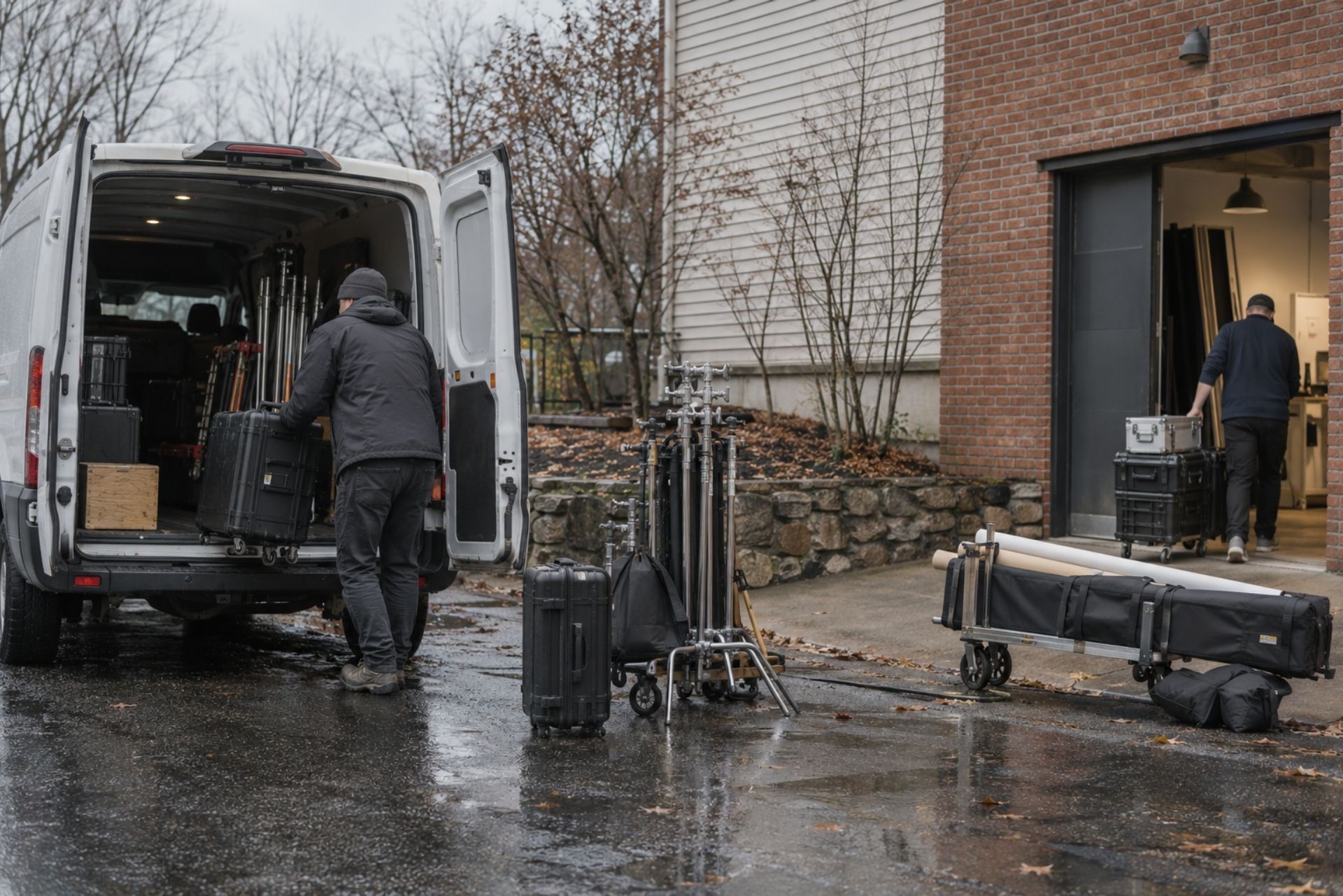
Photography studios face a unique combination of risks. You're working with expensive, portable equipment. You're hosting clients and models on-site. You're transporting gear to off-site locations. You're storing sensitive client data and irreplaceable digital files. Each of these activities creates a distinct insurance exposure.
A standard business owner's policy, or BOP, bundles general liability with property coverage and often serves as a starting point. But a BOP alone rarely covers everything a working studio needs. Gaps in professional liability, equipment coverage during transit, cyber exposures, and auto liability can leave you dangerously underinsured.
The right approach is to think of your insurance as layers. Start with the coverages Connecticut law requires, then add policies that address your specific operations. A studio that shoots exclusively on-site has different needs than one that regularly sends photographers to construction sites or event venues. Your coverage should reflect how you actually work, not how a generic policy template assumes you work. Photography-specific policies
often bundle several of these coverages together at lower combined premiums than buying each one separately.
Core Liability Coverage for Studio Operations
Liability insurance is the foundation of any commercial photography studio's risk management. Two distinct types of liability coverage address two very different categories of claims, and confusing them is one of the most common mistakes studio owners make.
General Liability: Protecting Against Third-Party Accidents
General liability, or GL, covers bodily injury and property damage claims from third parties. If a client trips over a light stand during a session and breaks their wrist, your GL policy responds. If your studio's signage falls and damages a neighboring business's storefront, GL covers that too.
Most commercial landlords in Connecticut require tenants to carry GL coverage with minimum limits of $1 million per occurrence and $2 million aggregate. Even if you own your space, carrying at least these limits is standard practice. GL also covers advertising injury claims, which can include allegations of copyright infringement in your promotional materials: a real risk for studios that use client images in portfolios or social media.
Professional Liability: Errors and Omissions in Creative Work
Professional liability, sometimes called errors and omissions or E&O, covers claims arising from your actual professional services. This is the policy that responds when you accidentally delete a client's files, deliver images that don't match contractual specifications, or miss a deadline that causes your client financial harm.
Here's where many studio owners get caught off guard: GL won't cover a claim from a wedding client whose entire reception went undocumented because you had a memory card failure. That's a professional liability claim.
E&O policies for photographers typically cover the cost of reshooting, financial damages to the client, and your legal defense costs.
Comparison: General Liability vs. Professional Liability
These two policies work together but cover fundamentally different risks. The table below clarifies the distinction:
| Feature | General Liability | Professional Liability (E&O) |
|---|---|---|
| What it covers | Bodily injury, property damage, advertising injury | Errors, omissions, failure to deliver services |
| Example claim | Client slips on wet studio floor | Photographer loses all images from a corporate event |
| Who's injured | Third party's body or property | Client's finances or project |
| Typical limits | $1M per occurrence / $2M aggregate | $1M per claim / $1M aggregate |
| Required by landlords? | Almost always | Rarely |
| Required by clients? | Often | Sometimes, especially corporate clients |
Many studio owners assume their GL policy covers everything. It doesn't. A corporate client who sues because you failed to deliver contracted headshots on time is filing a professional liability claim, and your GL insurer will deny it. Carrying both policies eliminates this dangerous coverage gap.
Protecting Your Assets: Property and Equipment Insurance
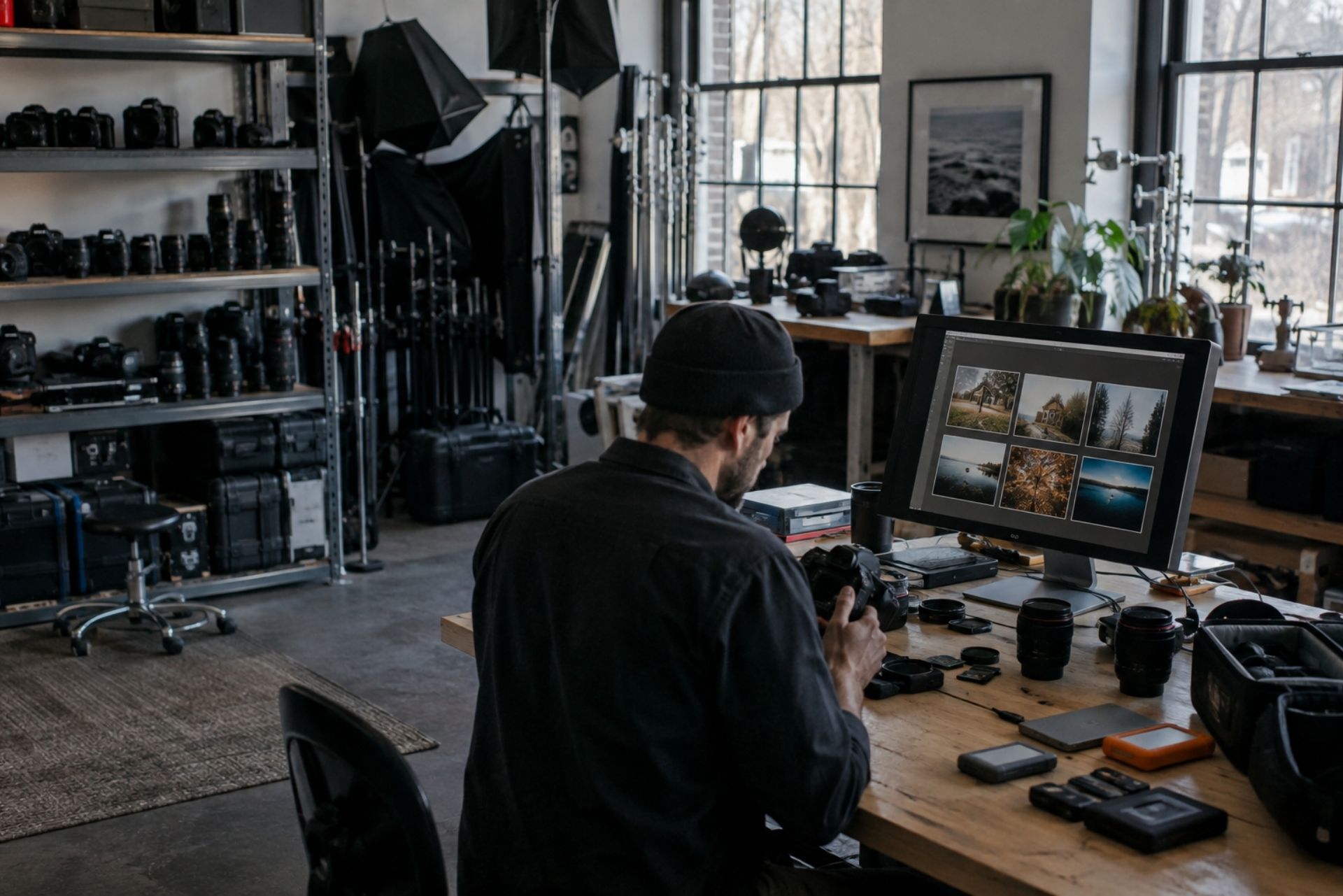
Your studio's physical assets, from backdrops and lighting rigs to computers and lenses, represent a significant financial investment. Protecting that investment requires understanding two related but distinct coverage types.
Business Personal Property for Studio Gear and Furniture
Business personal property, or BPP, coverage insures the contents of your studio: cameras, lenses, lighting equipment, computers, furniture, props, and printed materials. A standard BOP typically includes BPP coverage, but the default limits often fall short for photography studios where equipment values can easily exceed $50,000 or $100,000.
Pay close attention to whether your policy covers replacement cost or actual cash value. Replacement cost pays what it takes to buy new equivalent equipment. Actual cash value deducts depreciation, which means a three-year-old camera body might only pay out at 40% of its original price. For a working studio, replacement cost coverage is worth the higher premium. The commercial property insurance market in 2026 has shown some rate stabilization, making this a reasonable time to review your coverage limits.
Inland Marine: Coverage for Off-Site Shoots
Standard property policies cover your equipment while it's inside your studio. The moment you pack a camera bag into your car for a location shoot, that coverage typically ends. Inland marine insurance, sometimes called a floater or equipment floater, extends protection to your gear wherever you take it.
This coverage matters enormously for photographers who shoot on location. It protects against theft from a vehicle, accidental damage during transport, and loss at a shoot location. If you've ever set a lens on a railing at an outdoor venue and watched it fall, you understand why this coverage exists. Inland marine policies can be written on a scheduled basis, where you list specific high-value items, or on a blanket basis that covers all equipment up to a set limit.
Connecticut State Requirements and Operational Policies
Connecticut imposes specific insurance requirements on businesses, and several optional coverages address risks that are particularly relevant to photography studios operating in the state.
Workers' Compensation Laws for CT Studio Owners
Connecticut requires workers' compensation insurance for any business with one or more employees, including part-time workers. There is no minimum-hours threshold. If you hire even a single part-time studio assistant, you need a workers' comp policy. Studios that fail to comply face penalties of up to $250 per employee per day of non-compliance: a cost that adds up fast.
Sole proprietors and LLC members can exempt themselves from coverage, but doing so means your own medical bills from a workplace injury come entirely out of pocket. Connecticut's workers' compensation rate filings for 2026 reflect ongoing adjustments to classification codes, so confirming your studio's proper classification with your insurer is worth doing annually.
Commercial Auto: Hired and Non-Owned Coverage
If your studio owns vehicles used for business, you need a commercial auto policy. But even if you don't own business vehicles, you likely have auto exposure. When you or an employee drives a personal car to a client shoot, your personal auto policy may not cover an accident that occurs during a business errand.
Hired and non-owned auto coverage fills this gap. It provides liability protection when employees use their own vehicles for studio business or when you rent a van to transport equipment to a large production. This coverage is inexpensive relative to the risk it addresses, and many commercial clients require it before allowing photographers on their premises.
Cyber Liability: Securing Client Data and Digital Archives
Photography studios store client data that goes beyond just images. You're likely holding names, email addresses, payment card information, and sometimes sensitive corporate materials from commercial clients. A data breach, whether from a ransomware attack or a stolen laptop, can trigger notification requirements under Connecticut's data breach laws.
Cyber liability insurance covers the costs of breach notification, credit monitoring for affected clients, forensic investigation, legal defense, and regulatory fines. It can also cover business interruption losses if a cyberattack takes your systems offline during your busiest season. The 2026 commercial insurance market outlook indicates continued growth in cyber claims across small businesses, making this coverage increasingly relevant for studios of all sizes.
Common Questions About Photography Insurance
Do I need insurance if I'm a freelance photographer with no employees? Yes. Even without employees, you face liability exposure from client injuries, equipment loss, and professional errors. Many venues and corporate clients won't hire you without proof of general liability coverage.
How much does photography studio insurance typically cost? A basic general liability policy for a small studio often runs between $300 and $600 per year. Adding professional liability, inland marine, and cyber coverage can bring annual premiums to $1,500 to $3,000 depending on revenue and equipment values.
Does my homeowner's policy cover my photography business? Almost never. Most homeowner's policies explicitly exclude business activities and business property. Operating a studio from home without a separate business policy creates a significant coverage gap.
Can I get one policy that covers everything? A business owner's policy bundles GL and property coverage, and some insurers offer photography-specific packages that add E&O and inland marine. Workers' comp and commercial auto are typically written as separate policies.
Do I need cyber insurance if I only store images on external hard drives? If you collect any client payment information or personal data, you have cyber exposure regardless of how you store files. Physical theft of a hard drive containing client data can trigger the same breach notification requirements as a hack.
Are second shooters and assistants considered employees? Connecticut applies an "ABC test" to determine worker classification. Many second shooters who work under your direction, use your equipment, and shoot at your assigned events may legally qualify as employees, which triggers workers' comp requirements.
Does general liability cover damaged or lost client property? GL can cover damage to client property in your care, custody, or control, but many policies exclude or limit this coverage. If clients regularly leave valuable items at your studio, ask your insurer about care, custody, and control endorsements.
Making the Right Choice for Your Studio
Building the right insurance program for a Connecticut photography studio means matching your coverage to your actual operations, not buying a one-size-fits-all package and hoping for the best. Start with the legal requirements: workers' compensation if you have any employees, and the liability limits your lease demands. Then layer on professional liability, inland marine for location work, and cyber coverage based on how you handle client data.
Review your policies annually. Your equipment values change, your revenue fluctuates, and Connecticut's regulatory environment shifts. The 2026 legislative session has produced mixed results for business groups, and staying current on state requirements protects you from compliance surprises.
Talk to an insurance agent who understands creative businesses. A generalist agent may not know that your $12,000 medium-format camera needs scheduled coverage on an inland marine policy, or that your standard GL policy won't respond to a missed-deadline claim. The right agent asks about your workflow, your client contracts, and your shooting locations before recommending coverage. That conversation is the single most valuable step you can take toward protecting the business you've built.
About The Author:
John F. McGuire
As President of Ferguson & McGuire, I’m committed to helping families and businesses throughout Connecticut find insurance solutions they can trust. With decades of experience in the industry, my focus is on providing personal service, reliable protection, and long-term peace of mind for every client we serve.
GET A QUOTE POPUP
TESTIMONIALS
Business Insurance Client Stories

Business Insurance Solutions in Connecticut
Tailored Assessments for Businesses
We delve into the intricacies of your business operations and insurance requirements, focusing on the specific challenges and opportunities presented by the Connecticut business landscape. Our aim is to identify comprehensive coverage strategies that fully protect your business interests.
Customized Commercial Insurance Solutions
With a keen eye on the unique needs of Connecticut businesses, we craft insurance solutions that precisely match your requirements. Our process is centered around developing the perfect insurance plan that aligns with your business goals and challenges.
Efficient Policy Setup & Ongoing Support
Initiate your selected insurance coverage swiftly, backed by our dedication to offer continuous support for any questions, claims, or adjustments needed. We are committed to keeping you informed and secure, ensuring your business is always prepared and protected.
Commercial Insurance Coverage in Connecticut
General Liability Insurance
Designed for Connecticut businesses, our General Liability Insurance provides essential protection against claims of bodily injury, property damage, and more, ensuring your business is defended against various liabilities.
Workers Compensation Insurance
Tailored for Connecticut businesses, Workers Compensation Insurance covers employee injuries or illnesses occurring on the job, protecting both your employees and your business's financial health.
Professional Liability Insurance
Our Professional Liability Insurance for Connecticut professionals offers extended coverage to protect against claims of negligence or errors in services provided, securing your professional reputation.
Business Owner's Policy (BOP) Insurance
Perfect for Connecticut businesses, our BOP Insurance merges property and liability coverage into a single policy, providing comprehensive protection for your business operations and assets against a multitude of risks.
Cyber Liability Insurance
Aimed at Connecticut businesses in the digital realm, our Cyber Liability Insurance covers risks associated with data breaches, cyber-attacks, and other online threats, ensuring your business's digital assets are protected.
Data Breach Insurance
Specifically for businesses in Connecticut dealing with sensitive information, our Data Breach Liability Insurance offers vital coverage for incidents of data loss or theft, giving you peace of mind in handling digital data.
OUR SERVICES
Explore Our Wide Range of Tailored Insurance Services
FAQs about a credible Connecticut Business Insurance Agency
All About CT Business Insurance: Your Queries Answered
Connecticut Businesses We Serve
Contractor Insurance
Our Contractor Insurance in Connecticut provides General Liability coverage, essential for defending against bodily injury and property damage claims, crucial for your contracting business's resilience and operational continuity.
Bar Insurance
Customized for Connecticut bars, our insurance solutions include Workers Compensation, ensuring employees are covered and your establishment's financial health is maintained in case of job-related injuries or illnesses.
Auto Body Insurance
Connecticut auto body shops benefit from our General Liability Insurance, offering protection against claims of bodily injury and property damage, vital for your business's reputation and financial stability.
Engineers Insurance
Engineers Insurance in Connecticut encompasses Workers Compensation coverage, providing your employees and engineering firm with financial protection against the consequences of workplace injuries or illnesses.
Electricians Insurance
For electricians in Connecticut, our General Liability Insurance is designed to cover occupational risks, including bodily injury and property damage claims, ensuring your business's smooth operation and security.
HVAC Contractors Insurance
HVAC contractors in Connecticut have access to our comprehensive insurance solutions, including Workers Compensation, which covers employee-related injuries or illnesses, maintaining your workforce's well-being and your business's financial health.
Ready to Get Your Business Insured?
Contact Us