Connecticut Electronics Manufacturer Insurance

See How We're Different
or call us: (203) 269-9565
Connecticut's electronics manufacturing sector carries a distinct risk profile. Between precision assembly lines, sensitive intellectual property, and components that end up in everything from medical devices to defense systems, a single defective part can trigger claims worth millions. Understanding what insurance a Connecticut electronics manufacturer needs, from liability and property coverage to cyber protection and workers' compensation, isn't optional. It's a financial survival strategy. The insurance market in 2026 is also shifting in ways that directly affect your premiums and coverage options, making this a particularly important year to review your policies. Whether you're running a 15-person PCB shop in Waterbury or a 200-employee semiconductor facility in Danbury, the right coverage structure can mean the difference between absorbing a loss and closing your doors.
Electronics manufacturing in Connecticut sits at the intersection of high precision and high consequence. Your products may be small, but the liabilities tied to them are not. The average product liability claim in the electronics sector now exceeds $7 million, and that figure doesn't account for recall costs or reputational damage.
Connecticut's regulatory environment adds another layer. The state requires workers' compensation for virtually all employers, and recent legislative changes, including Public Act 24-138, have given manufacturers greater flexibility to form captive insurance companies from protected cells. That's a meaningful option for mid-size operations looking to take more control over their risk financing.
The 2026 commercial insurance market is also behaving unevenly. Property and cyber rates have stabilized somewhat, but
liability and auto lines are hardening due to rising repair costs and so-called "social inflation," where jury awards keep climbing. For electronics manufacturers, this means your renewal conversations should start early and include a thorough review of coverage limits.
Core Insurance Coverages for Electronics Manufacturers
Every electronics manufacturer needs a foundation of standard commercial coverages before layering on specialized protections. These aren't optional extras. They're the policies that keep your operations running after a fire, a workplace injury, or a lawsuit from a downstream customer.
General Liability and Product Liability
General liability protects you against third-party bodily injury and property damage claims that occur on your premises or as a result of your operations. If a vendor trips in your warehouse or a delivery driver damages a client's loading dock, this policy responds.
Product liability is where things get expensive for electronics manufacturers. Your components travel through complex supply chains and end up in products where failure can cause serious harm. General liability rates are trending upward by 5% to 8% in 2026, driven by nuclear verdicts that regularly exceed $10 million. A standalone product liability policy, or a well-structured endorsement on your general liability, is essential. Don't assume your GL policy provides adequate product liability limits. Review the aggregate carefully.
Commercial Property and Equipment Breakdown
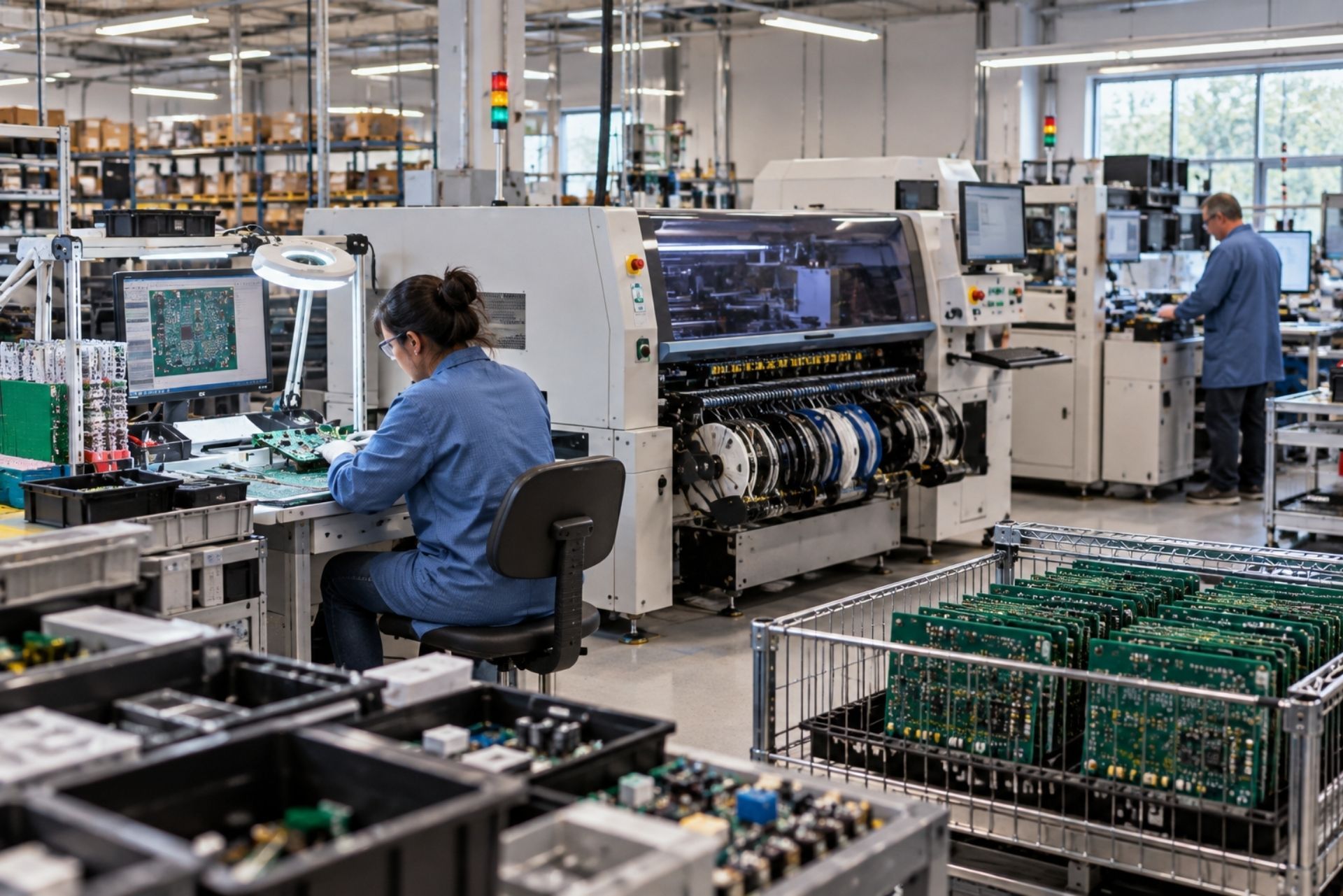
Your facility houses specialized equipment that costs hundreds of thousands of dollars to replace: pick-and-place machines, reflow ovens, automated optical inspection systems. Standard commercial property insurance covers damage from fire, storms, theft, and similar perils. But standard property policies often exclude mechanical or electrical breakdown of equipment.
Equipment breakdown coverage (sometimes called boiler and machinery insurance) fills that gap. It pays for repairs or replacement when a critical machine fails due to electrical surge, motor burnout, or mechanical defect. Connecticut's industrial property insurance market is substantial, and carriers in the state are experienced with manufacturing risks. Make sure your property valuation reflects current replacement costs, not what you paid five years ago.
Workers' Compensation in Connecticut
Connecticut law requires nearly all employers to carry workers' compensation insurance. There's no minimum employee threshold: even a single employee triggers the requirement. Penalties for non-compliance include fines and potential criminal charges.
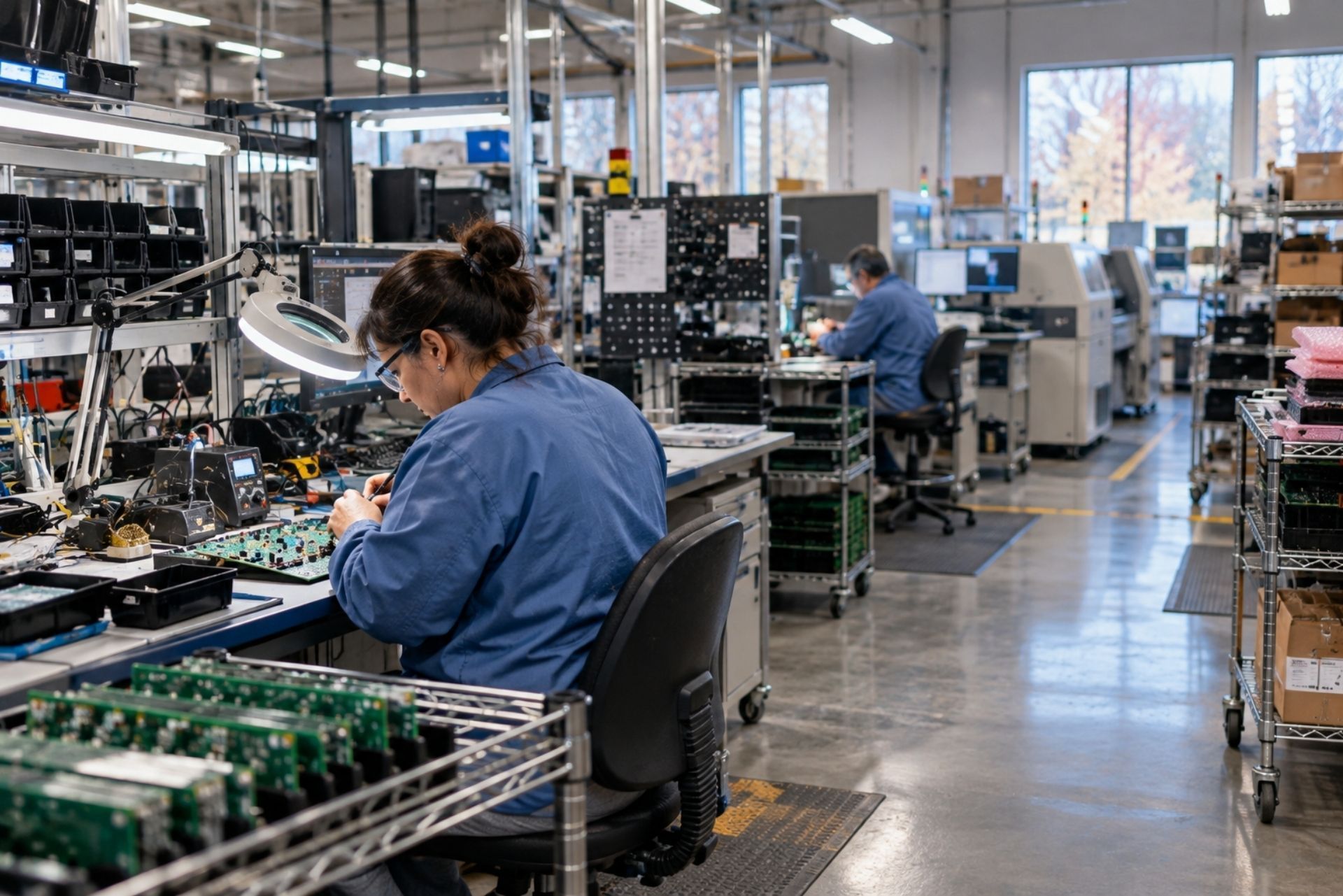
For electronics manufacturers, common claims involve repetitive motion injuries from assembly work, chemical exposure from soldering or cleaning agents, and eye strain from microscope-based inspection. Your experience modification rate (e-mod) directly affects your premiums. A strong safety program that reduces claims frequency can lower your e-mod below 1.0, saving you thousands annually. Connecticut small businesses with 50 or fewer employees may also benefit from a state tax credit of up to $1,000 per employee per year when offering an Individual Coverage Health Reimbursement Arrangement, which can offset some of the overall cost of employee benefits.
Specialized Protection for Tech Components
Standard policies form the base, but electronics manufacturing introduces risks that generic coverage wasn't designed to handle. These specialized policies address the unique exposures tied to design work, digital systems, and global supply chains.
Errors and Omissions (E&O) for Design Flaws
If your company designs circuits, writes firmware, or provides engineering specifications alongside your manufactured products, you need professional liability coverage. E&O insurance responds when a client alleges that your design, advice, or technical specifications caused them financial harm, even if no physical damage occurred.
A common scenario: you design a custom sensor module for an automotive supplier. The design meets the agreed specifications but fails under conditions the client expected it to handle. The resulting production delay costs them $2 million. Your general liability policy won't cover this because there's no bodily injury or property damage. E&O will. As chip complexity increases, the risk of defects grows and individual product failures carry larger costs than they did historically.
Cyber Liability and Data Protection
Electronics manufacturers are prime targets for cyberattacks. You hold proprietary designs, customer specifications, and often connect to client networks through shared project management platforms. A ransomware attack that locks your CAD files or exposes a defense contractor's technical data can generate enormous liability.
Cyber liability insurance covers breach notification costs, forensic investigation, business interruption from a cyber event, and third-party claims arising from data exposure. The good news for 2026 is that cyber insurance rates have stabilized after several years of steep increases. That said, carriers are scrutinizing your cybersecurity controls more closely than ever. Expect questions about multi-factor authentication, endpoint detection, and backup protocols during underwriting.
Supply Chain and Business Interruption
A fire at a single supplier's facility in Asia can halt your production for weeks. Business interruption insurance covers your lost income and continuing expenses when a covered peril shuts down your operations. Contingent business interruption extends that protection to disruptions at your key suppliers' or customers' locations.
For electronics manufacturers who depend on a small number of specialized component suppliers, this coverage is critical. Review your policy's waiting period (the deductible measured in time rather than dollars) and make sure the coverage period is long enough to account for realistic recovery timelines. Rebuilding a specialty supply relationship can take months, not weeks.
Comparing Coverage Needs: Standard vs. Specialized
Understanding how different policy types overlap and differ helps you avoid both gaps and redundant spending. The table below highlights one of the most common points of confusion.
Comparison Table: General Liability vs. Professional Liability
| Feature | General Liability (GL) | Professional Liability (E&O) |
|---|---|---|
| What it covers | Bodily injury, property damage, advertising injury | Financial loss from professional errors, design flaws, bad advice |
| Trigger | Physical harm or property damage | Economic harm, even without physical damage |
| Common claim example | Client injured visiting your facility | Faulty circuit design causes production delays |
| Who needs it | All manufacturers | Manufacturers who design, engineer, or consult |
| Policy type | Occurrence-based (typically) | Claims-made (typically) |
| 2026 rate trend | Increasing 5-8% | Stable to moderate increases |
One key distinction: GL policies are usually occurrence-based, meaning they cover incidents that happen during the policy period regardless of when the claim is filed. E&O policies are typically claims-made, meaning the policy must be active both when the error occurred and when the claim is filed. If you cancel an E&O policy, you'll need tail coverage to protect against late-filed claims.
Common Questions About Manufacturing Insurance
Do I need product liability if I only make components?
Yes. Even if your component is one small piece of a larger product, you can be named in a lawsuit if that product fails. Downstream manufacturers and their attorneys will trace the failure back through the supply chain. Your exposure may actually be harder to quantify because your component interacts with parts you didn't design.
Is workers' comp required for a small shop in CT?
Connecticut requires workers' compensation coverage for virtually all employers, with very few exceptions. There's no minimum employee count. Even sole proprietors with one part-time worker need a policy. Operating without it can result in fines and potential criminal charges, plus personal liability for any workplace injuries. https://jmg.com/blog/avoiding-the-daily-penalty-for-workers-compensation-in-connecticut/ https://www.cga.ct.gov/2007/AMD/S/2007SB-00931-R00SA-AMD.htm
How does equipment breakdown insurance differ from a warranty?
A manufacturer's warranty covers defects in materials or workmanship during a limited period. Equipment breakdown insurance covers sudden mechanical or electrical failure regardless of the equipment's age, and it also covers the resulting business interruption and spoilage. Once your warranty expires, equipment breakdown coverage becomes your primary financial protection against machine failure.
Will my policy cover international shipping risks?
Standard commercial property and GL policies typically don't cover goods in international transit. You'll need inland marine or ocean cargo insurance, depending on your shipping routes. If you're selling FOB origin, the buyer assumes risk once goods leave your dock. But if you're selling CIF or DDP, you're responsible for insuring goods until they reach the destination. Review your Incoterms carefully with your broker.
How are insurance premiums calculated for tech firms?
Carriers look at your annual revenue, payroll, claims history, product types, and the industries you serve. Selling components for medical devices or aerospace applications will generate higher premiums than consumer electronics because the downstream liability exposure is greater. Your e-mod for workers' comp, your cybersecurity posture for cyber liability, and your quality control documentation for product liability all influence pricing.
Making the Right Choice for Your Facility
The insurance needs of a Connecticut electronics manufacturer span a wide range, from mandatory workers' compensation and general liability to specialized protections like E&O, cyber liability, and supply chain coverage. No single policy handles everything, and the wrong combination leaves expensive gaps.
Start by mapping your actual risk exposures. What products do you make, who uses them, and what happens when they fail? How dependent are you on specific suppliers or customers? What digital systems hold your most sensitive data? The answers to these questions should drive your coverage decisions, not a generic industry template.
Work with a broker who understands manufacturing and, ideally, one with experience in Connecticut's regulatory environment. The captive insurance options now available under state law may offer cost advantages for companies with strong loss histories. Your 2026 renewal is an opportunity to restructure coverage in a market where some lines are softening while others tighten. Don't wait until 30 days before expiration to start that conversation.
About The Author:
John F. McGuire
As President of Ferguson & McGuire, I’m committed to helping families and businesses throughout Connecticut find insurance solutions they can trust. With decades of experience in the industry, my focus is on providing personal service, reliable protection, and long-term peace of mind for every client we serve.
GET A QUOTE POPUP
TESTIMONIALS
Business Insurance Client Stories

Business Insurance Solutions in Connecticut
Tailored Assessments for Businesses
We delve into the intricacies of your business operations and insurance requirements, focusing on the specific challenges and opportunities presented by the Connecticut business landscape. Our aim is to identify comprehensive coverage strategies that fully protect your business interests.
Customized Commercial Insurance Solutions
With a keen eye on the unique needs of Connecticut businesses, we craft insurance solutions that precisely match your requirements. Our process is centered around developing the perfect insurance plan that aligns with your business goals and challenges.
Efficient Policy Setup & Ongoing Support
Initiate your selected insurance coverage swiftly, backed by our dedication to offer continuous support for any questions, claims, or adjustments needed. We are committed to keeping you informed and secure, ensuring your business is always prepared and protected.
Commercial Insurance Coverage in Connecticut
General Liability Insurance
Designed for Connecticut businesses, our General Liability Insurance provides essential protection against claims of bodily injury, property damage, and more, ensuring your business is defended against various liabilities.
Workers Compensation Insurance
Tailored for Connecticut businesses, Workers Compensation Insurance covers employee injuries or illnesses occurring on the job, protecting both your employees and your business's financial health.
Professional Liability Insurance
Our Professional Liability Insurance for Connecticut professionals offers extended coverage to protect against claims of negligence or errors in services provided, securing your professional reputation.
Business Owner's Policy (BOP) Insurance
Perfect for Connecticut businesses, our BOP Insurance merges property and liability coverage into a single policy, providing comprehensive protection for your business operations and assets against a multitude of risks.
Cyber Liability Insurance
Aimed at Connecticut businesses in the digital realm, our Cyber Liability Insurance covers risks associated with data breaches, cyber-attacks, and other online threats, ensuring your business's digital assets are protected.
Data Breach Insurance
Specifically for businesses in Connecticut dealing with sensitive information, our Data Breach Liability Insurance offers vital coverage for incidents of data loss or theft, giving you peace of mind in handling digital data.
OUR SERVICES
Explore Our Wide Range of Tailored Insurance Services
FAQs about a credible Connecticut Business Insurance Agency
All About CT Business Insurance: Your Queries Answered
Connecticut Businesses We Serve
Contractor Insurance
Our Contractor Insurance in Connecticut provides General Liability coverage, essential for defending against bodily injury and property damage claims, crucial for your contracting business's resilience and operational continuity.
Bar Insurance
Customized for Connecticut bars, our insurance solutions include Workers Compensation, ensuring employees are covered and your establishment's financial health is maintained in case of job-related injuries or illnesses.
Auto Body Insurance
Connecticut auto body shops benefit from our General Liability Insurance, offering protection against claims of bodily injury and property damage, vital for your business's reputation and financial stability.
Engineers Insurance
Engineers Insurance in Connecticut encompasses Workers Compensation coverage, providing your employees and engineering firm with financial protection against the consequences of workplace injuries or illnesses.
Electricians Insurance
For electricians in Connecticut, our General Liability Insurance is designed to cover occupational risks, including bodily injury and property damage claims, ensuring your business's smooth operation and security.
HVAC Contractors Insurance
HVAC contractors in Connecticut have access to our comprehensive insurance solutions, including Workers Compensation, which covers employee-related injuries or illnesses, maintaining your workforce's well-being and your business's financial health.
Ready to Get Your Business Insured?
Contact Us