Connecticut Tool Rental Company Insurance

See How We're Different
or call us: (203) 269-9565
A single table saw returned with a cracked guard can trigger a liability claim that costs more than your entire quarterly revenue. For Connecticut tool rental companies, the risk profile is unlike most retail businesses: you're putting potentially dangerous equipment into the hands of customers with varying skill levels, then hoping it comes back in one piece. The insurance question isn't whether you need coverage, but which types of coverage actually protect you from the specific threats your business faces.
Connecticut's regulatory environment adds another layer. The state mandates certain coverages, and property and casualty claims in the state have recently reached $6.4 billion, driven partly by urban congestion, coastal weather, and aging infrastructure. Rental yards sit squarely in that risk zone. Whether you run a small storefront in Torrington or a multi-location operation serving Hartford contractors, understanding the full spectrum of insurance needs, from liability and property to auto, cyber, and workers' compensation, is essential to staying in business.
This guide breaks down each coverage type, Connecticut-specific mandates, and the policy structures that actually fit rental operations.
Essential Insurance Coverages for Connecticut Equipment Rentals
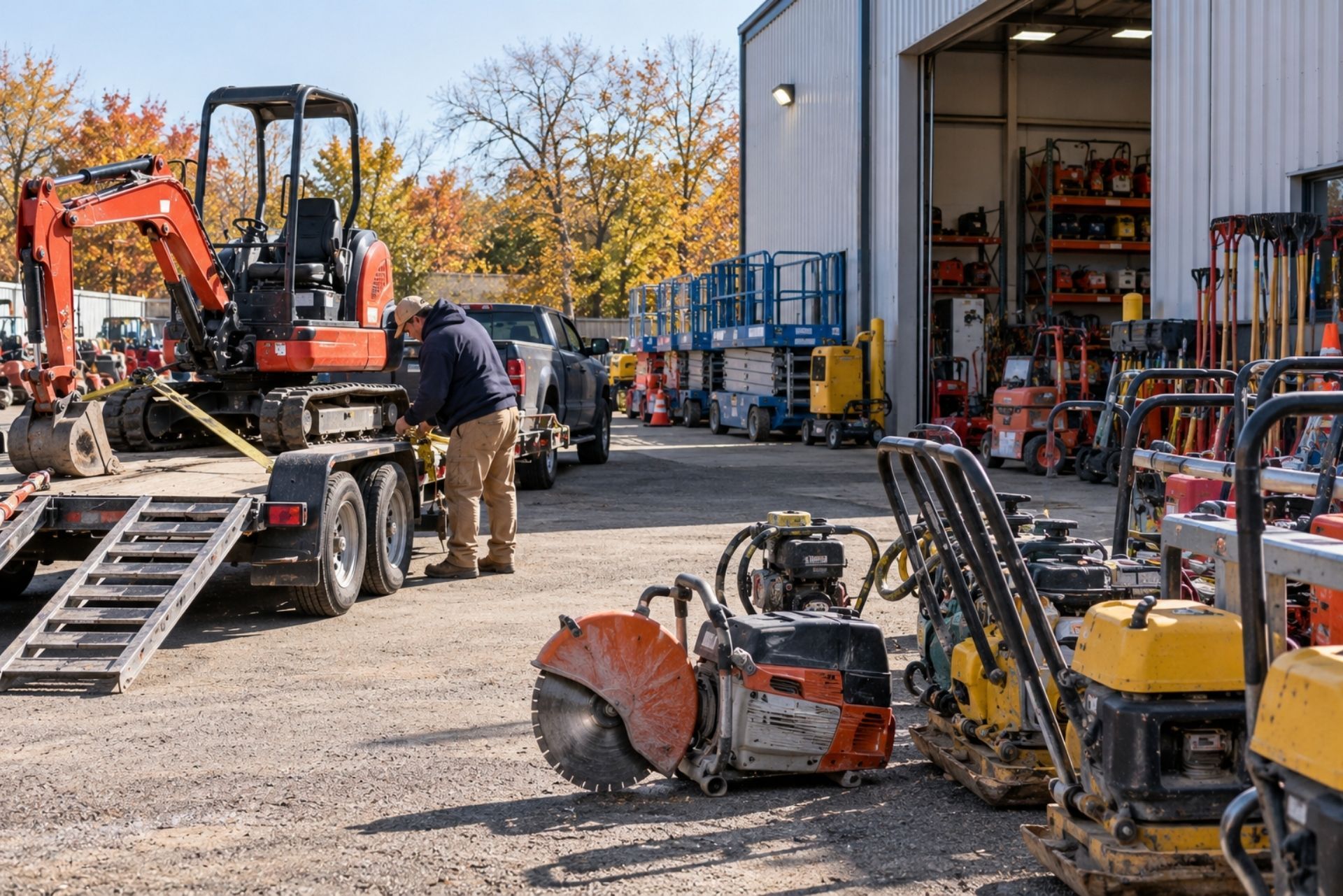
Tool rental companies face a distinct combination of exposures. Your inventory leaves your premises daily, customers operate equipment you own, and a single malfunction can result in bodily injury. No single policy addresses all of these risks. Instead, you need a layered approach that covers your physical location, your mobile inventory, and the liability that follows your tools wherever they go.
General Liability for Customer Injuries
General liability insurance is the foundation. If a customer injures themselves using a rented concrete saw, or if a visitor trips over equipment in your shop, GL coverage pays for medical expenses, legal defense, and settlements. Connecticut's Department of Consumer Protection requires licensed home improvement contractors to carry general liability insurance, and many tool rental companies fall into overlapping categories if they provide installation or repair services alongside rentals.
A standard GL policy typically covers third-party bodily injury, property damage, and personal or advertising injury. For a tool rental business, pay close attention to your policy's "products-completed operations" coverage. This is the portion that responds when a tool you rented causes harm after it leaves your shop. Without it, you're exposed to the most common claim scenario in the rental industry.
Inland Marine Insurance for Tools in Transit
Standard commercial property policies cover your inventory while it sits in your warehouse. The moment a customer loads a generator into their truck, that coverage usually stops. Inland marine insurance fills this gap by protecting movable property, tools, equipment, and machinery while in transit or at a customer's job site.
For rental companies, inland marine is not optional in practice. Your entire business model depends on equipment leaving your premises. A good inland marine policy covers theft, accidental damage, and vandalism while tools are in a customer's possession or being transported. Some policies also cover equipment being shipped between your locations. Given that a single stolen skid steer or damaged aerial lift can represent tens of thousands in losses, this coverage pays for itself quickly.
Commercial Property for Your Warehouse or Storefront
Your physical location, whether it's a standalone warehouse, a retail storefront, or a yard with storage containers, needs commercial property coverage. This protects the building itself, your on-site inventory, office equipment, and business records.
Connecticut property insurance premiums have been climbing. The state's Insurance Department has approved recent rate increases of 9.6% and 13.5% for commercial property coverage. Coastal locations face even steeper rates due to hurricane and flood exposure. If your shop is in Bridgeport, New Haven, or anywhere along the shoreline, expect to pay a premium that reflects those risks. Consider business interruption coverage as an add-on: if a fire shuts your warehouse down for three months, this pays for lost income during the rebuild.
Meeting Connecticut State Mandates
Connecticut imposes specific insurance requirements that aren't negotiable. Failing to carry mandated coverage exposes you to fines, license revocation, and personal liability for any resulting claims.
Workers' Compensation Requirements
Connecticut requires workers' compensation coverage from the moment a business hires its first employee, with no exemptions for small businesses or part-time staff. If you have even one part-time employee helping customers at the counter, you need a workers' comp policy.
The good news for 2026: Connecticut regulators approved a 3.8% average decrease in voluntary market workers' compensation premium rates effective January 1, 2026. That's a modest but welcome reduction, especially for rental shops where employees handle heavy equipment daily and face higher injury risk classifications. Your premium is calculated based on payroll and job classification codes, so employees who operate or demonstrate power tools will carry higher rates than office staff.
Commercial Auto Insurance for Delivery Fleets
If you deliver tools to job sites, your personal auto policy won't cover those trips. Connecticut requires commercial auto insurance for any vehicle used in business operations. This includes owned trucks, vans, and even employee vehicles used for deliveries under a hired and non-owned auto endorsement.
Your commercial auto policy should include liability, collision, comprehensive, and uninsured motorist coverage. For rental companies that transport heavy equipment on flatbeds or trailers, make sure your policy's weight and vehicle class ratings match your actual fleet. An underinsured policy that doesn't cover your F-350 and equipment trailer is worse than no policy at all, because it creates a false sense of security.
Comparing Standard vs. Specialized Rental Policies
A common mistake is buying a generic business owner's policy and assuming it covers rental-specific risks. Standard policies often exclude or limit coverage for property in the care of others, which is the core of your business model. Specialized rental policies are designed to address these gaps.
Comparison Table: Basic Liability vs. Comprehensive Rental Coverage
| Coverage Feature | Basic Business Owner's Policy | Comprehensive Rental Policy |
|---|---|---|
| General Liability | Included | Included |
| Property at Your Location | Included | Included |
| Tools in Customer Possession | Typically excluded | Covered via inland mari |
| Customer Damage to Rented Tools | Not covered | Optional damage waiver program |
| Product Liability | Limited or excluded | Included |
| Rental Contract Disputes | Not covered | Legal defense included |
| Equipment Breakdown | Add-on required | Often bundled |
| Cyber Liability | Rarely included | Available as endorsement |
The difference is significant. A comprehensive rental policy treats your business as what it is: a company that regularly hands valuable, potentially dangerous equipment to third parties. If you're collecting customer payment data, either online or through a point-of-sale system, a cyber liability endorsement protects against data breaches and the notification costs Connecticut law requires after an incident.
Mitigating Risks Specific to Power Tools and Heavy Machinery
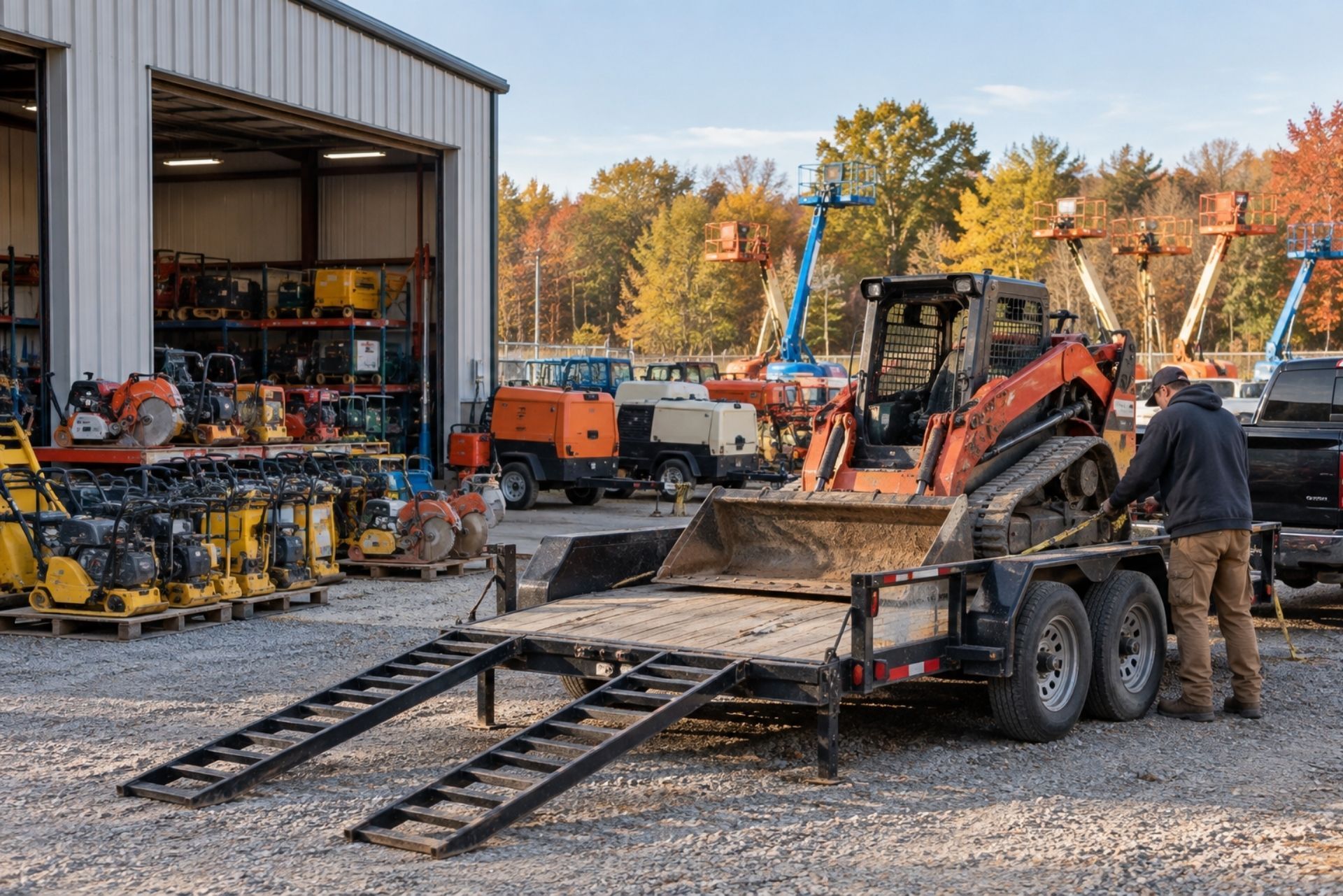
Renting out a cordless drill carries different risks than renting out a walk-behind trencher. Your insurance strategy should reflect the actual equipment in your inventory and the maintenance practices that keep it safe.
Product Liability and Maintenance Records
Product liability coverage protects you if a tool malfunctions and injures someone. Here's where maintenance records become your best friend. If a customer is injured by a rented chainsaw and you can produce documented inspection and maintenance logs showing the tool was in proper working order, your defense is substantially stronger.
Keep records of every inspection, repair, and maintenance action for each piece of equipment. Include dates, the technician's name, and what was done. This documentation doesn't just help in court: it also demonstrates to your insurer that you're managing risk proactively, which can influence your premium at renewal. Connecticut's new right-to-repair rules, taking effect July 1, 2026, require manufacturers to provide repair manuals and parts to independent providers, which should make maintaining your fleet easier and more transparent.
Rental Contract Indemnity Clauses
Your rental agreement is a risk management tool, not just a transaction document. A well-drafted indemnity clause shifts certain liabilities to the customer, such as damage caused by misuse or failure to follow operating instructions. These clauses don't replace insurance, but they create an additional layer of protection.
Work with an attorney familiar with Connecticut contract law to draft enforceable indemnity language. Courts in Connecticut will generally uphold indemnity clauses if they're clearly written and the customer had a reasonable opportunity to read them before signing. Burying critical terms in fine print is a good way to have a judge throw them out.
One more regulatory note: effective July 1, 2026, Connecticut's new transparency law
requires businesses to include all mandatory fees in advertised prices, excluding taxes. If you charge a damage waiver fee or insurance surcharge on rentals, that cost must be included in your quoted price.
Common Questions About Tool Rental Insurance
Do I need insurance if customers sign a waiver? Yes. Waivers are routinely challenged in Connecticut courts, and they don't prevent someone from filing a lawsuit. A signed waiver may help your defense, but it won't pay your legal bills or a settlement. You need active coverage regardless.
Does my personal auto policy cover my delivery truck? No. Personal auto policies exclude business use. If your employee is delivering a pressure washer in your company van and causes an accident, your personal policy will deny the claim. You need a commercial auto policy with appropriate vehicle classifications.
What happens if a tool is stolen from a customer? Inland marine insurance typically covers theft of your equipment while it's in a customer's possession, though specific policy terms vary. Review your policy's theft provisions carefully, and make sure your rental contracts require customers to report theft immediately and file a police report.
Is workers' comp mandatory for family-run shops in CT? Generally yes. Connecticut requires workers' compensation for almost all employers with one or more employees. Sole proprietors with no employees may be exempt, but the moment you hire anyone, including a family member, coverage is mandatory.
Making the Right Choice for Your Shop
The insurance needs of a Connecticut tool rental company span five core areas: general liability, commercial property, inland marine, commercial auto, and workers' compensation. Cyber liability rounds out the picture for any shop processing customer payments digitally. Skipping any of these creates a gap that a single incident can exploit.
Start by auditing your current policies against the comparison table above. Identify where standard business coverage falls short of your actual rental operations. Then talk to a broker who specializes in equipment rental businesses, not a generalist who will hand you a boilerplate policy.
Connecticut's regulatory environment is shifting in 2026, with new transparency rules and decreasing workers' comp rates creating both obligations and opportunities. The companies that thrive will be the ones that treat insurance not as an expense to minimize, but as a structural part of their risk management. Get your coverage right, keep your maintenance records tight, and make sure your rental contracts do the heavy lifting they're designed to do.
About The Author:
John F. McGuire
As President of Ferguson & McGuire, I’m committed to helping families and businesses throughout Connecticut find insurance solutions they can trust. With decades of experience in the industry, my focus is on providing personal service, reliable protection, and long-term peace of mind for every client we serve.
GET A QUOTE POPUP
TESTIMONIALS
Business Insurance Client Stories

Business Insurance Solutions in Connecticut
Tailored Assessments for Businesses
We delve into the intricacies of your business operations and insurance requirements, focusing on the specific challenges and opportunities presented by the Connecticut business landscape. Our aim is to identify comprehensive coverage strategies that fully protect your business interests.
Customized Commercial Insurance Solutions
With a keen eye on the unique needs of Connecticut businesses, we craft insurance solutions that precisely match your requirements. Our process is centered around developing the perfect insurance plan that aligns with your business goals and challenges.
Efficient Policy Setup & Ongoing Support
Initiate your selected insurance coverage swiftly, backed by our dedication to offer continuous support for any questions, claims, or adjustments needed. We are committed to keeping you informed and secure, ensuring your business is always prepared and protected.
Commercial Insurance Coverage in Connecticut
General Liability Insurance
Designed for Connecticut businesses, our General Liability Insurance provides essential protection against claims of bodily injury, property damage, and more, ensuring your business is defended against various liabilities.
Workers Compensation Insurance
Tailored for Connecticut businesses, Workers Compensation Insurance covers employee injuries or illnesses occurring on the job, protecting both your employees and your business's financial health.
Professional Liability Insurance
Our Professional Liability Insurance for Connecticut professionals offers extended coverage to protect against claims of negligence or errors in services provided, securing your professional reputation.
Business Owner's Policy (BOP) Insurance
Perfect for Connecticut businesses, our BOP Insurance merges property and liability coverage into a single policy, providing comprehensive protection for your business operations and assets against a multitude of risks.
Cyber Liability Insurance
Aimed at Connecticut businesses in the digital realm, our Cyber Liability Insurance covers risks associated with data breaches, cyber-attacks, and other online threats, ensuring your business's digital assets are protected.
Data Breach Insurance
Specifically for businesses in Connecticut dealing with sensitive information, our Data Breach Liability Insurance offers vital coverage for incidents of data loss or theft, giving you peace of mind in handling digital data.
OUR SERVICES
Explore Our Wide Range of Tailored Insurance Services
FAQs about a credible Connecticut Business Insurance Agency
All About CT Business Insurance: Your Queries Answered
Connecticut Businesses We Serve
Contractor Insurance
Our Contractor Insurance in Connecticut provides General Liability coverage, essential for defending against bodily injury and property damage claims, crucial for your contracting business's resilience and operational continuity.
Bar Insurance
Customized for Connecticut bars, our insurance solutions include Workers Compensation, ensuring employees are covered and your establishment's financial health is maintained in case of job-related injuries or illnesses.
Auto Body Insurance
Connecticut auto body shops benefit from our General Liability Insurance, offering protection against claims of bodily injury and property damage, vital for your business's reputation and financial stability.
Engineers Insurance
Engineers Insurance in Connecticut encompasses Workers Compensation coverage, providing your employees and engineering firm with financial protection against the consequences of workplace injuries or illnesses.
Electricians Insurance
For electricians in Connecticut, our General Liability Insurance is designed to cover occupational risks, including bodily injury and property damage claims, ensuring your business's smooth operation and security.
HVAC Contractors Insurance
HVAC contractors in Connecticut have access to our comprehensive insurance solutions, including Workers Compensation, which covers employee-related injuries or illnesses, maintaining your workforce's well-being and your business's financial health.
Ready to Get Your Business Insured?
Contact Us